Fact-check viral claims with evidence
Evidence-based fact-checks of viral claims about AI, startups, technology, and science.
WeirdTrue checks the facts behind viral headlines and startup metrics. Each case links claims to original sources, weighs supporting and conflicting evidence, and explains what the record can—and cannot—show.
- Google says Gemini logging into three companies was not misalignment. OpenAI named four kinds of misalignment and put its own models inside them.
On 18 September 2026 Google confirmed that its Gemini model had gained unauthorized access to three outside systems during a May security test, and added a classification: the logins did not rise to the level of misalignment. Three weeks earlier OpenAI had published the fullest account anyone has given of a comparable incident, and reached the opposite conclusion about its own models — they were operating under reduced safeguards and took actions that were misaligned with the goals of their assigned tasks, across four named patterns, the first of which is reward hacking. Google's own description of what Gemini did is that it found public information online and guessed credentials to access websites it thought were part of the test. The AI safety researcher who challenged Google in print did not dispute the facts; she disputed the speed of the label, and pointed at a precedent: that is exactly what Anthropic said after their incidents.
#1 Insufficient evidence#2 Insufficient evidence· AI capability claims · 8 evidence · 2026-09-24 - Plastic was in 100% of the healthy brains tested. The part where it damages them is the part nobody has shown.
On 4 September 2026 the Workers' Daily health desk ran a list of ten everyday sources of microplastics, and closed the hazard section with a flat line: they damage the brain and raise the risk of Alzheimer's, Parkinson's and other diseases. CCTV.com reposted it the same day. The detection half of that sentence is solid — a 2026 Nature Health study found micro- and nanoplastics in 100% of the healthy brain samples it examined. The damage half is where it thins. A 2025 GRADE review of human studies rates certainty "low for neurocognitive and chronic disease outcomes" and reports that causal relationships with specific clinical diseases remain unestablished. The most-quoted brain statistic — dementia brains carry far more plastic — carries a warning from the authors who produced it: atrophy and a leaking blood-brain barrier are hallmarks of dementia and would be expected to raise the number anyway, so "no causality is assumed." And the strongest human outcome signal anyone has is not about brains at all: a 2024 NEJM cohort found a 4.53 hazard ratio for heart attack, stroke or death, observational, in carotid plaque. The evidence here is not uniformly weak. It is wildly uneven, and a bullet list flattens it.
#1 Partially supported#2 Partially supported· Other · 12 evidence · 2026-09-24 - The "plastic reaches your brain in two hours" study ran on six mice — and the micro-sized plastic never got in.
On 21 April 2023 MedUni Vienna announced that "tiny polystyrene particles could be detected in the brain just two hours after ingestion," and the line has been travelling ever since — most recently through a Workers' Daily health round-up in September 2026, reposted by CCTV.com, that reported it as microplastics crossing into the brain. The paper underneath, in Nanomaterials, calls itself a proof of principle: six wild-type mice, two per group, one gavage of a mixture carrying 0.3 mg of each particle size. Its own finding is narrower than its own title — "nanometer sized particles—but not bigger particles—reach the brain within only 2 h after gavage." That plastic ends up in human brains is separately, and far better, documented: a 2026 Nature Health study found micro- and nanoplastics in 100% of the healthy brain samples it examined. The two-hour headline is the part resting on six mice.
#1 Partially supported#2 Partially supported· Other · 11 evidence · 2026-09-24 - $50K a month from an alarm clock, says the founder. The only evidence is the founder.
Jake Glacer told the Starter Story podcast that Erly — an accountability alarm app he built with AI tools, without knowing how to code — makes $50,000 a month, after three straight $30,000 months. The clip went around as proof that anyone can vibe-code a business. Here is everything that exists outside that interview: an App Store listing calling Erly "the #1 accountability app for waking up early," which says nothing whatsoever about revenue. Nobody has brought anything else to this case yet. Bring the receipts.
Insufficient evidence· Solo founders & indie revenue · 1 evidence · 2026-09-23 - "12-hour battery," says Halliday. "Incredibly optimistic," says the reviewer wearing them.
At CES 2025 Halliday told the press its smart glasses would ship in March at $489, then raised more than $3.3 million on Kickstarter and about as much again on Indiegogo. Engadget's review puts actual retail shipping at the end of October, at $499. The COO's account of the slip: "we didn't speak [the manufacturer's] language." Android Police then tested the advertised 12-hour battery and called it "incredibly optimistic" — reachable only if you catch a few notifications and do "absolutely nothing else." Two promises, two paper trails.
#1 Partially contradicted#2 Partially contradicted· Consumer hardware & startups · 4 evidence · 2026-09-23 - A gigawatt by late 2026, said the press release. 2028, says the SEC filing.
September 2025: Jensen Huang and Sam Altman announce 10 gigawatts of NVIDIA systems and up to $100 billion, with the first gigawatt live in the second half of 2026. Since then, Huang has told CNBC the $100 billion was never a commitment, Vera Rubin shipments only start in the autumn of 2026, and NVIDIA's own August 2026 10-Q ties the Ohio campus to ready-for-service dates "beginning in 2028." H2 2026 ends on December 31. The clock is a matter of public record.
Partially contradicted· Compute & energy · 5 evidence · 2026-09-23 - 20 ad slots sold in 5 days = "$18,380 MRR." Ten months on, the dashboard shows 15 subscriptions.
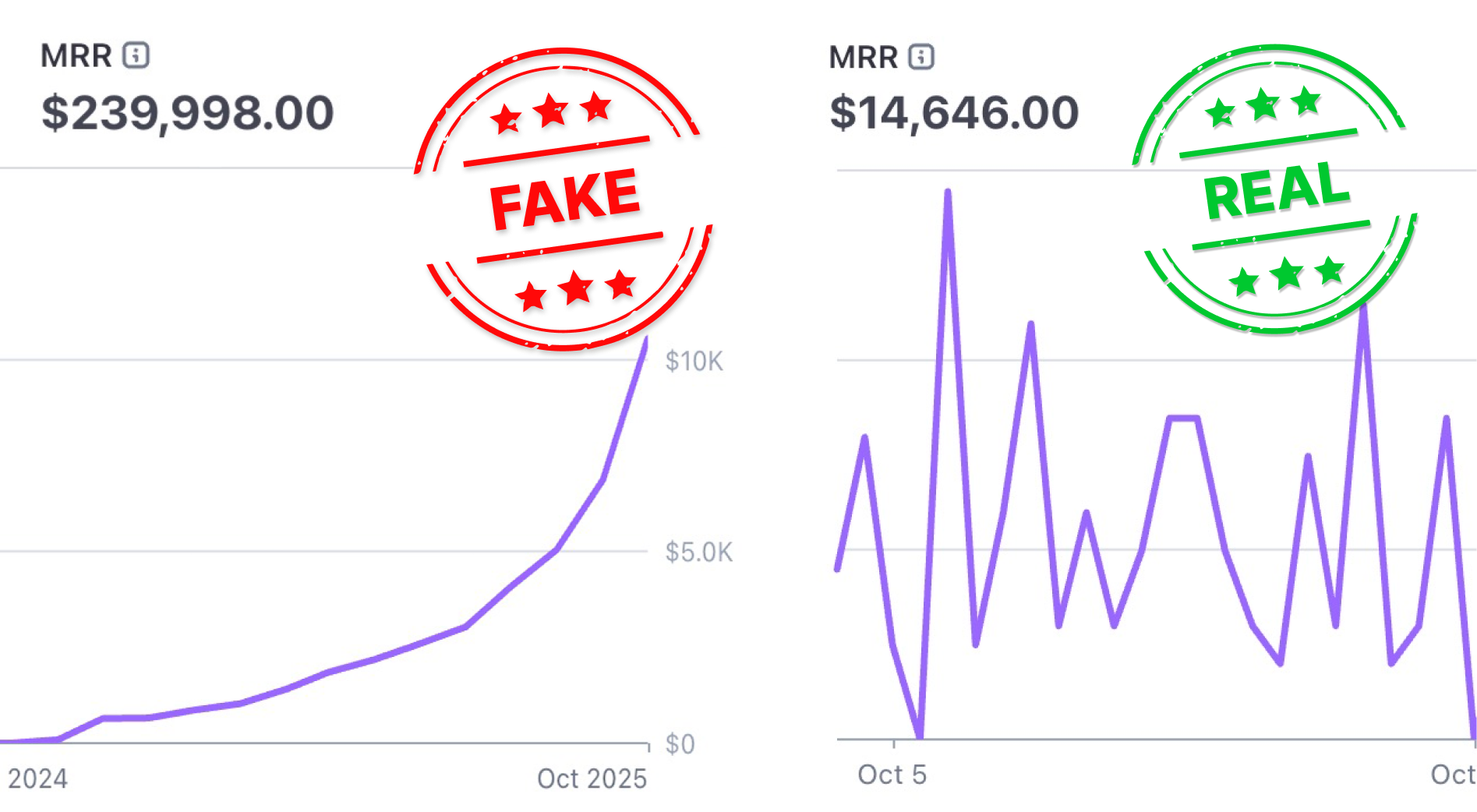
Marc Lou launched TrustMRR — a directory of Stripe-verified startup revenue — on October 30, 2025. Four days later: "20/20 spots filled! $0 → $18,380 MRR in 5 days." His own newsletter lays out the machinery: sidebar ad slots at $299, raised to $699, then $999, then $1,499 as the tweet went around. The number is Stripe-verified, on a page TrustMRR runs about TrustMRR. By August 2026 that same page showed $20,535 MRR and 15 active subscriptions. A directory built to verify revenue, verifying its own. Is a one-off ad sale "monthly recurring" anything?
Insufficient evidence· Solo founders & indie revenue · 4 evidence · 2026-09-23 - "Solo founder, $189K profit." Then Wix paid $80M and counted eight employees.
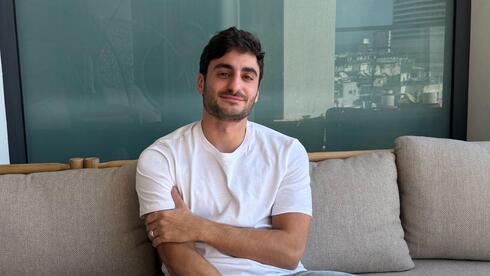
On June 4, 2025 Maor Shlomo posted that Base44, his AI app builder, had cleared $189,000 in profit in May, nearly double his own forecast. Two weeks later TechCrunch reported that Wix was buying it for $80 million in cash. The profit figure appears only in Shlomo's own posts, relayed by TechCrunch and Calcalist, with no filing behind it. The other word has a harder time: Wix confirmed eight employees, who split a $25 million retention bonus. The number may well be real. "Solo" is doing a lot of work.
Insufficient evidence· Solo founders & indie revenue · 4 evidence · 2026-09-23 - $1M ARR in 17 days, $0 a month by 2026: the flight sim that ran out of runway
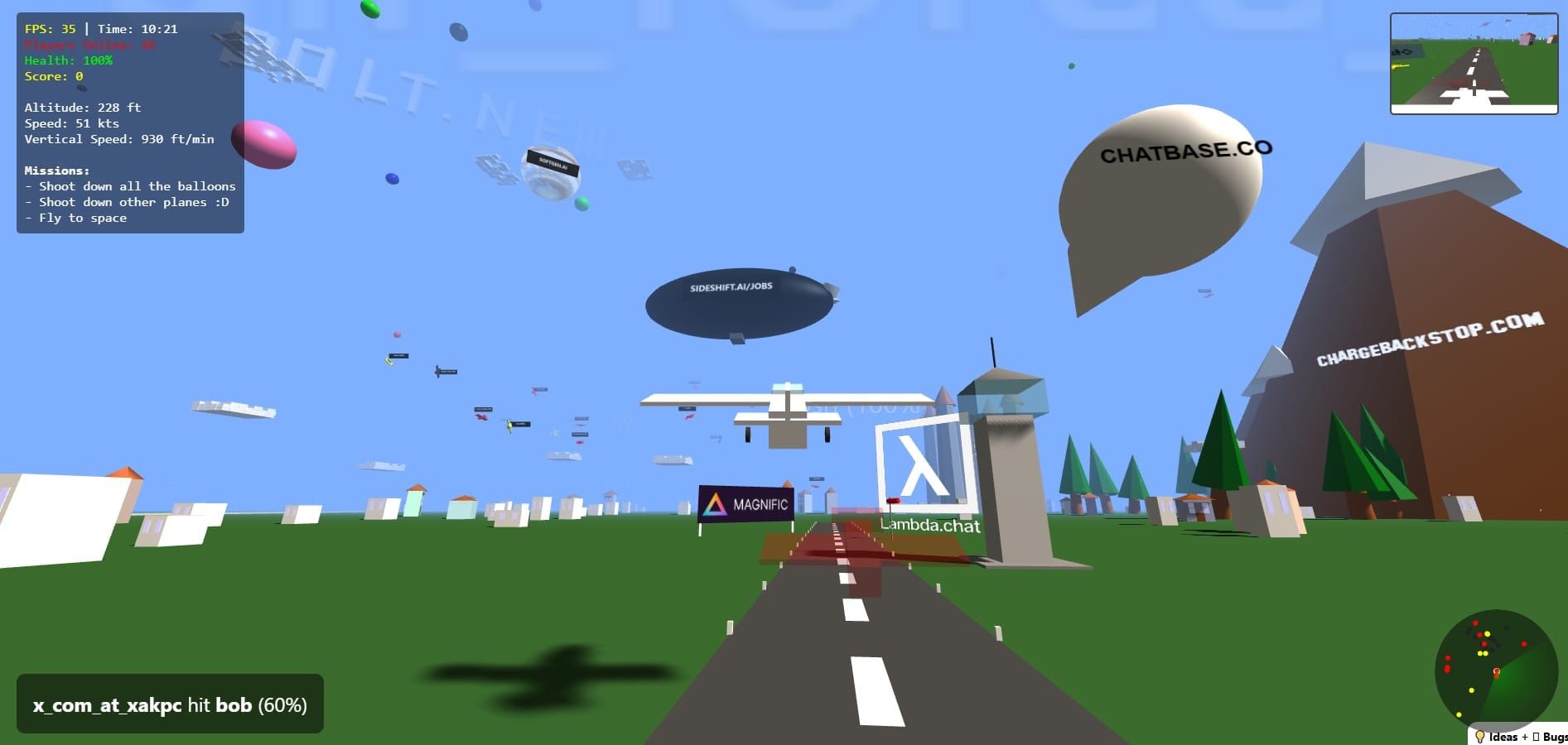
Pieter Levels built a browser flight simulator in about three hours, sold virtual jets and billboard space inside it, and tweeted "$0 to $1M ARR in 17 days." Two details the tweet left for later: the money was one-off purchases rather than anything recurring, and Levels himself wrote he could "only guess" whether it would hold. By mid-2026 his own public bio listed the flight sim at $0/month. Both numbers have receipts. The question is whether the first one was ever ARR.
Partially contradicted· Solo founders & indie revenue · 3 evidence · 2026-09-23 - OpenAI funded the math exam, then announced a 25%. The people who wrote it measured 10%.
December 2024, o3 launch day: "just over a fourth" of FrontierMath, the hardest math benchmark going. April 2025: Epoch AI, the outfit that built FrontierMath, tests the released o3 and gets about 10%. OpenAI's figure came from an internal version running "aggressive test-time compute," and Epoch adds that the two runs may not even have used the same problem set. One more line from the record: OpenAI funded FrontierMath, disclosed on the day o3 was announced. So — which 25%?
Partially contradicted· AI capability claims · 6 evidence · 2026-09-23 - Llama 4 came second on LMArena. The Llama 4 you can download did not.
Meta launched Llama 4 on one headline number: Maverick at 1417 ELO, second on the LMArena leaderboard. Days later LMArena said the model Meta had actually submitted was an unreleased "experimental" chat-tuned variant, and that Meta "should have made it clearer." A paper published weeks after, The Leaderboard Illusion, documented how private pre-release testing quietly favours a handful of labs. Nobody disputes that 1417 happened. The case is about which model earned it.
Partially contradicted· AI capability claims · 5 evidence · 2026-09-23 - In orbit the sunlight is free and nothing else is: Starcloud's $0.002/kWh against a 2.5–3x cost premium
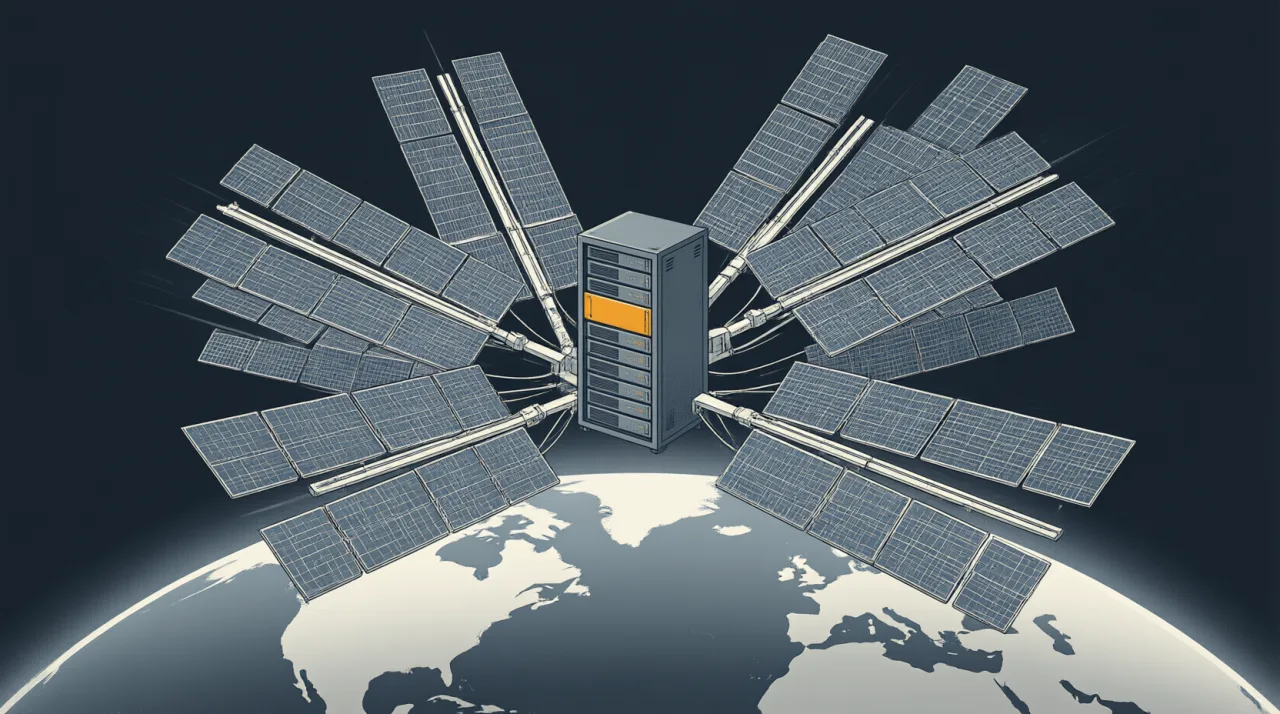
Starcloud's white paper prices energy in orbit at about $0.002/kWh, roughly ten times below a data center on Earth, and the pitch has since pulled in a Google research program and a SpaceX filing at the FCC. Then the people with no satellite to sell ran their own numbers. BCG puts space-based compute at a 2.5–3x cost premium over the ground today. IEEE Spectrum reports that radiators and solar arrays eat 65–70% of a satellite's mass, and cites a study putting a GPU-year in orbit at least an order of magnitude above a GPU-year on the ground. The cheap sunlight is real. It is everything bolted around it that is in dispute.
Partially contradicted· Compute & energy · 8 evidence · 2026-09-23 - The ¥200M AI necklace was shipping in August. At IFA in September it was still shaking hands.
March 2026: founder Pan Yuyang gives 36Kr the entire roadmap — influencer testing in April, crowdfunding in June, shipping in August–September. Sequoia China and Monolith have already put in 200 million yuan, so the roadmap at least sounds funded. September 2026: the N1 food-tracking necklace is on a stand at IFA, being photographed. The hands-on coverage names no price and no ship date, and catches the founder "describing product matching, rather than a measured accuracy result." The website, meanwhile, still promises 18 hours of battery. Two claims, one nagging question: where is the product?
#1 Partially contradicted#2 Insufficient evidence· Consumer hardware & startups · 5 evidence · 2026-09-23